
ACL REHAB at hqpt
ACL Rehab Driven by Data — Not the Calendar
An ACL recovery is a 9–12 month journey, and the numbers on the other side are sobering: as many as 1 in 4 young athletes who return to sport after ACL reconstruction go on to tear an ACL again. The single biggest thing you can control is the quality of your rehab — and whether anyone actually measured you before clearing you.
The HQPT Difference
Plenty of clinics offer a “gait analysis” that amounts to a clinician watching you jog on a treadmill. We think your running deserves the same rigor as a pro athlete’s. That’s why every runner at HQPT is tested — objectively, repeatably, and in ways you can see for yourself.
One-on-one, every visit. You spend your entire session with a Doctor of Physical Therapy — never handed off to a tech or left alone on a bike. A year-long recovery deserves more than 15 minutes of attention per visit.
Criteria-based, not calendar-based. You progress when your strength, movement, and confidence data say you’re ready — not because a protocol says it’s week 12. Objective testing at every phase tells us (and your surgeon) exactly where you stand.
We rehab past “functional.” Most ACL patients get discharged when they can walk, squat, and jog. That’s halftime. We stay with you through sprinting, cutting, jumping, and a full return-to-sport test battery — because that last phase is where reinjuries are prevented.
A team around you. We communicate with your surgeon throughout and share objective reports at every milestone, so everyone clearing you is looking at the same data.
Our Approach
Your rehab moves through five phases, and you’ll always know which one you’re in, what the goals are, and what numbers unlock the next one:

Phase 1 — Protect & Activate. Calm the knee, restore full extension, and wake up the quad — with BFR to fight muscle loss from day one.

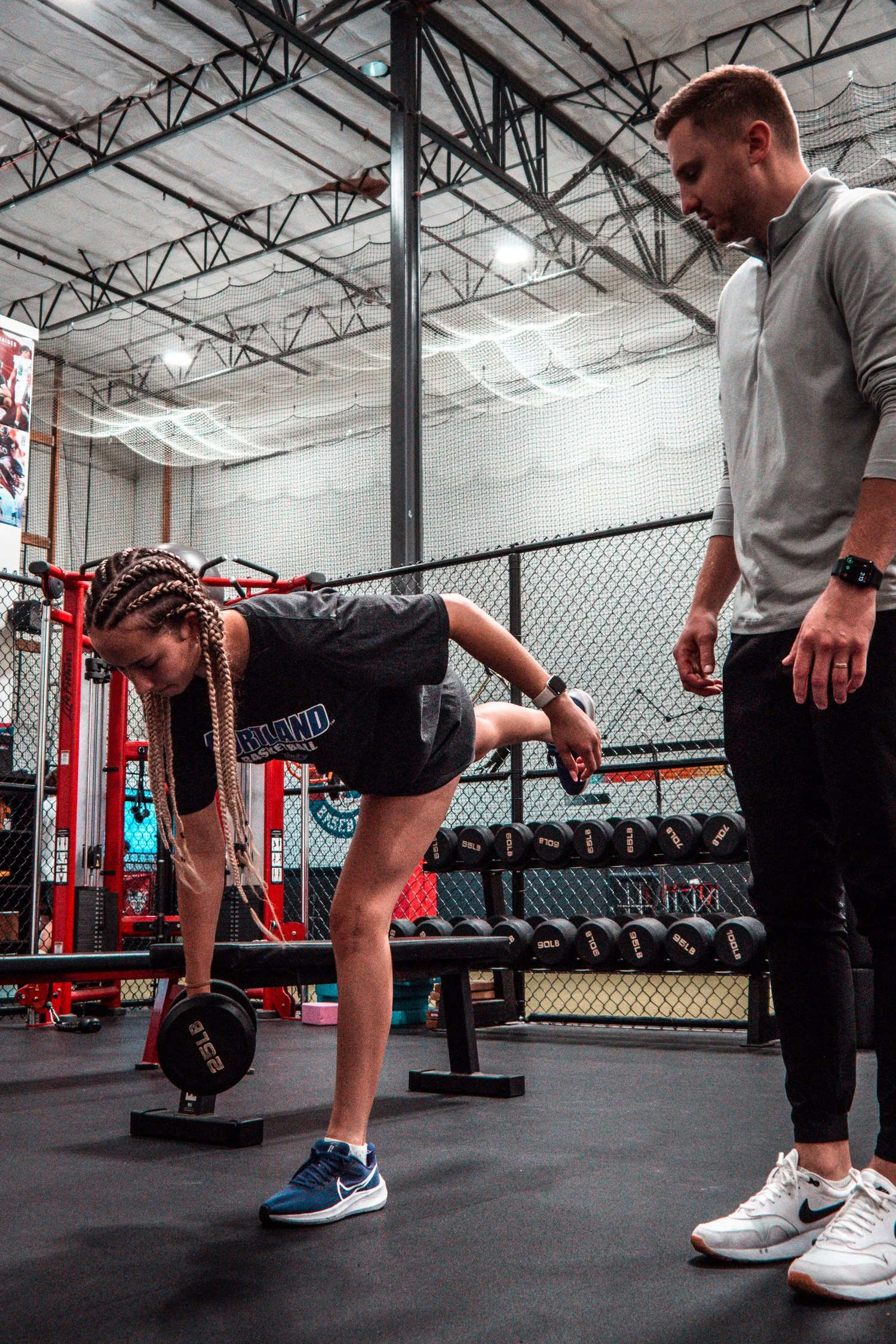
Phase 2 — Rebuild Strength. Progressive, heavy strength work with dynamometry benchmarks along the way. This is where most rehabs fall short; it’s where we live.
Phase 3 — Power & Plyometrics. Reintroduce jumping and landing, measured on the ForceDecks so asymmetries get caught and corrected early.

Phase 4 — Running, Cutting & Agility. Return to running guided by strength criteria and 3D motion capture, then progress to sport-specific change of direction.
Phase 5 — Return to Sport. A full objective test battery — strength, jump performance, hop testing, movement quality, and psychological readiness — before you’re cleared. (See our Return to Sport tab.)
Technology
We’ve invested in the same testing and training tools used by professional sports teams — because guessing has no place in an ACL recovery:
• BFR (blood flow restriction) to rebuild quad size and strength in the early phases, when heavy loading isn’t yet safe for your healing graft.
• Tindeq dynamometry to track your strength in hard numbers from your very first weeks, so progress is measured — never assumed.
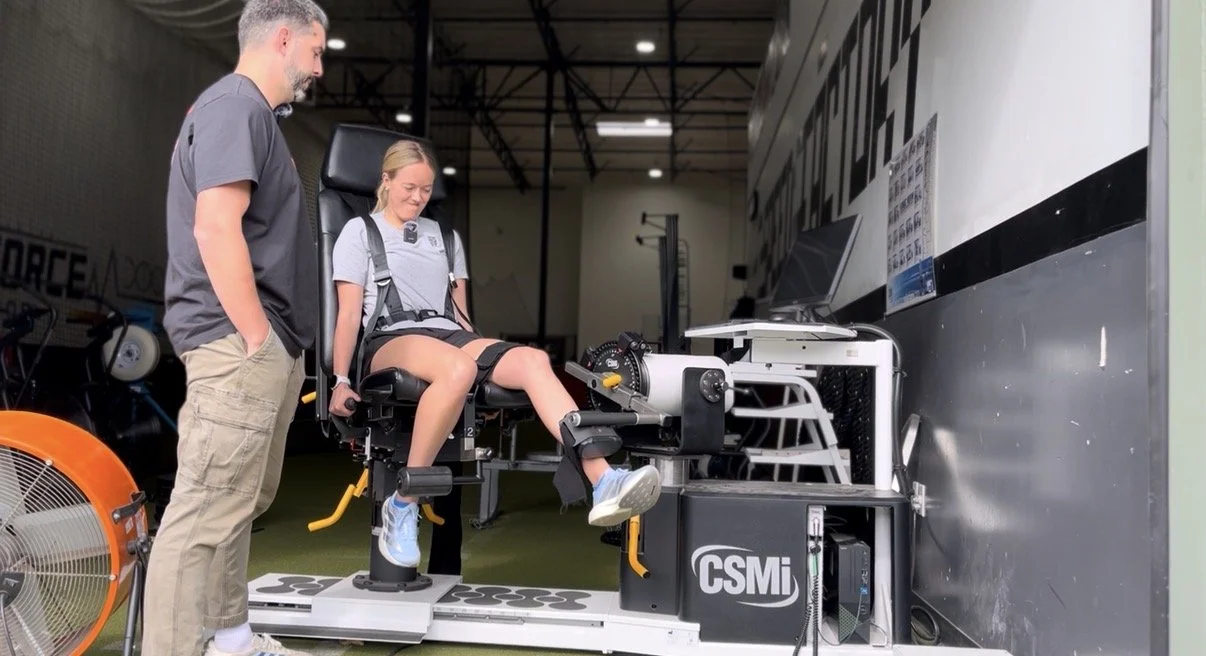
• Humac isokinetic testing the gold standard for isolating quad and hamstring strength — the same testing used in pro sports and ACL research to benchmark side-to-side symmetry.
• VALD ForceDecks to measure how you jump, land, and absorb force — and whether your surgical leg is truly pulling its weight.
• Model Health 3D motion capture to analyze your running, landing, and cutting mechanics as you return to dynamic movement.